
Do I Need to Count Every Calorie to Lose Weight?
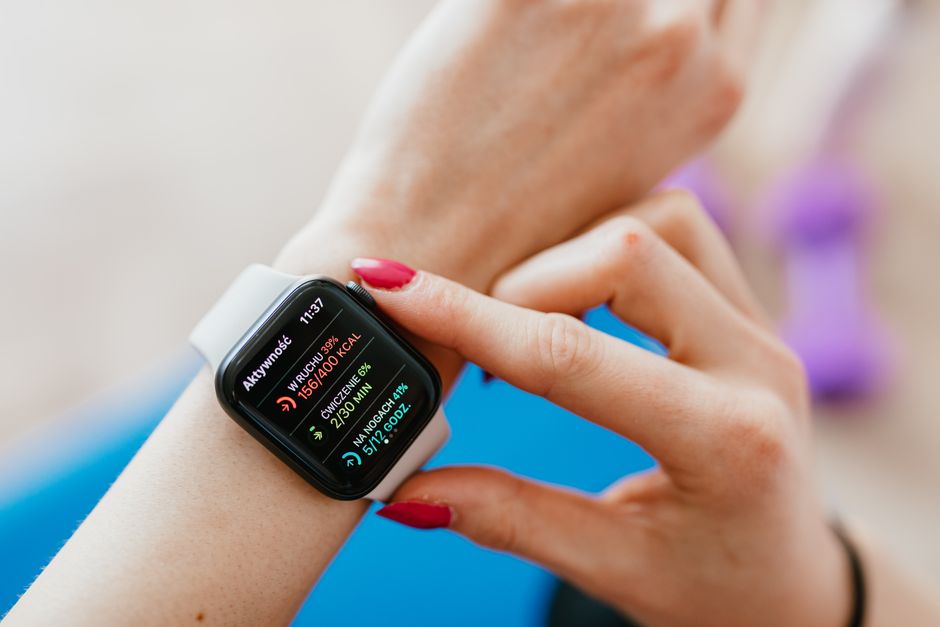
No. Calorie tracking can build useful awareness without becoming a full-time measuring project. A sustainable approach is to record enough to spot patterns, learn typical portions, and make one practical adjustment at a time. Detailed logging can be useful for a short learning period, but evidence also supports abbreviated forms of self-monitoring when complete tracking creates too much friction.
Do I have to count every calorie to lose weight?
No. The job of tracking is to reduce guesswork, not to create a perfect food archive that collapses the first time lunch happens away from home.
A systematic review in Public Health Nutrition examined behavioral weight-loss studies using dietary self-monitoring and found support for both lower- and higher-intensity approaches. The abbreviated approaches were not imaginary shortcuts: they included monitoring specific eating behaviors, meal patterns, traffic-light food categories, portion-size rankings, and meal photographs.
That gives beginners a useful operating rule: track the decision point, not every crumb. If afternoon snacks are unpredictable, record those. If restaurant meals are the blind spot, capture those. If breakfast is nearly identical most days, detailed repeated entry may add effort without adding much new awareness.
The weak rule is: “If the entry is not exact, it does not count.” The stronger rule is: “Record enough detail to make the next decision easier.” That shift protects the data from perfectionism.
There is a reason this matters. The National Institute of Diabetes and Digestive and Kidney Diseases explains that eating more calories than are used can lead to weight gain, while eating fewer calories than are used through physical activity can lead to weight loss. Tracking is one way to see the pattern behind that balance. It is not the only way, and it does not need to be permanent.
Can I lose weight without weighing all my food?
Yes. You can use weighing as a temporary calibration tool, then rely more on portion awareness and repeatable meal patterns.
NIDDK draws an important line between a portion, which is the amount chosen at one time, and the serving size on a label. Its lasagna example shows the practical cost of missing that distinction: a listed serving can become double the calories when the portion is doubled. The point is not to fear food. The point is to notice the multiplier.
| Situation | Useful awareness move | What to record |
|---|---|---|
| Repeated home meal | Check the portion once, then learn the visual pattern | Ingredients or a brief meal description |
| Packaged food | Read the serving size and servings per package | How much of the package was eaten |
| Restaurant meal | Choose a smaller serving or set aside part of the meal | A practical estimate, not a reconstruction |
| Shared meal | Describe the plate and note the parts that were hardest to judge | Meal type and the uncertain item |
The U.S. Food and Drug Administration says serving sizes on Nutrition Facts labels reflect amounts people typically consume, not a recommendation for how much they should eat or drink. The label uses familiar measures such as cups, tablespoons, pieces, slices, and jars. Those measures make better anchors than vague promises to “eat less.”
Use a short calibration phase when it answers a specific question. For example: “What does the label serving look like in the bowl normally used at home?” Once that is clear, the scale can step back. NIDDK explicitly states that people do not need to measure and count everything indefinitely; they may do it long enough to learn typical serving and portion sizes.
Restaurant meals need a different standard. NIDDK suggests requesting smaller servings or eating part of the meal and taking the remainder home. If neither fits the situation, record a plain-language estimate such as “shared pasta, larger-than-usual portion.” A useful imperfect entry beats an absent entry because it preserves the pattern.
How accurate does calorie tracking need to be?
It needs to be accurate enough to reveal a pattern and support the next adjustment; it does not need to be exact enough to win an accounting audit.
A Journal of the Academy of Nutrition and Dietetics analysis of randomized weight-loss trials found that the days on which participants logged at least a couple of eating occasions explained the most variation in weight loss. The same analysis reported that tracking dropped quickly over time. The practical lesson is clear: a smaller tracking habit that remains usable has more value than an elaborate method abandoned after the initial burst of effort.
Run this as a progression, not a lifetime contract:
- Start rough. Record meals, drinks, and the eating moments that are easiest to forget. Use a note, photo, or app entry.
- Find the repeat. Look for the meal, portion, timing, or setting that regularly creates uncertainty.
- Calibrate one variable. Check a label, compare a usual serving with a household measure, or log that recurring meal in more detail.
- Reduce the burden. Keep only the tracking that continues to answer a live question.
This is the Awareness Loop: record, notice, calibrate, simplify. It keeps the cognitive load where it belongs, on the few decisions that matter rather than on constant data entry.
Do not try to “fix” an imperfect restaurant or shared-meal entry by skipping the next entry. That converts one uncertain data point into a missing pattern. The replacement behavior is simple: write the best available description, then resume normal tracking at the next meal.
Weight-management targets also need a realistic frame. NIDDK describes an initial loss of five to ten percent of starting weight over six months as a common expert recommendation and emphasizes slow, modest weight loss. The relevant question is not whether a single day was perfectly logged. It is whether the approach can continue through a busy month without turning eating into a compliance test.
Frequently Asked Questions
What should I track first if logging meals feels overwhelming?
Start with the part of eating that creates the most uncertainty: a recurring meal, snacks, drinks, restaurant meals, or the timing and trigger for eating. NIDDK describes a food diary as a way to record what, when, where, why, and how much someone eats, so calories do not have to be the only starting point. Keep the first tracking task narrow enough that it can survive an ordinary workday.
Why do I stop calorie counting after a few weeks?
The workload often becomes the problem, not a lack of interest. In a Journal of the Academy of Nutrition and Dietetics analysis published in 2019, self-monitoring declined rapidly over time, with fewer than half of participants continuing by the tenth week across the adherence definitions examined. Replace an all-or-nothing rule with a smaller repeatable rule, such as logging the meals that are hardest to judge.
Can I use portion sizes instead of a calorie-counting app?
Yes. NIDDK states that measuring and counting do not need to continue indefinitely and can be used long enough to learn typical serving and portion sizes. Portion awareness works best when it is tied to real reference points, such as the household measures on a Nutrition Facts label, rather than treated as a vague guess.
The homework is small: choose one recurring eating situation this week and record it without trying to make it perfect. Then ask one question: “What detail would make this choice easier next time?” Keep that detail. Drop the rest.
Sources
- Public Health Nutrition systematic review indexed by PubMed
- Journal of the Academy of Nutrition and Dietetics trial analysis indexed by PubMed
- National Institute of Diabetes and Digestive and Kidney Diseases: Just Enough Food Portions
- National Institute of Diabetes and Digestive and Kidney Diseases: Health Tips for Adults
- U.S. Food and Drug Administration: Serving Size on the Nutrition Facts Label
Disclaimer: This article is for general information only and is not medical advice. It is not a substitute for diagnosis or treatment by a qualified healthcare professional. Always speak to your doctor before acting on anything you read here.